44 Diamonds Logo

The Science Behind Diamond Brilliance: Why Diamonds Sparkle So Beautifully

Back to Journal

May 4, 2026

The Science Behind Diamond Brilliance: Why Diamonds Sparkle So Beautifully

Diamonds have fascinated humanity for centuries—not just for their rarity, but for their unmatched sparkle. That dazzling effect you see when light hits a diamond is not magic; it’s a precise combination of science, craftsmanship, and natural properties.

In this guide, we break down the science behind diamond brilliance and what truly makes a diamond shine.

What Is Diamond Brilliance?

Brilliance refers to the white light reflected from a diamond’s surface and interior. It is one of the most important factors that determines how bright and lively a diamond appears.

Alongside brilliance, two other optical effects define a diamond’s beauty:

Fire – The rainbow-colored flashes created when light disperses

Scintillation – The sparkle you see when a diamond moves

A high-quality diamond balances all three perfectly.
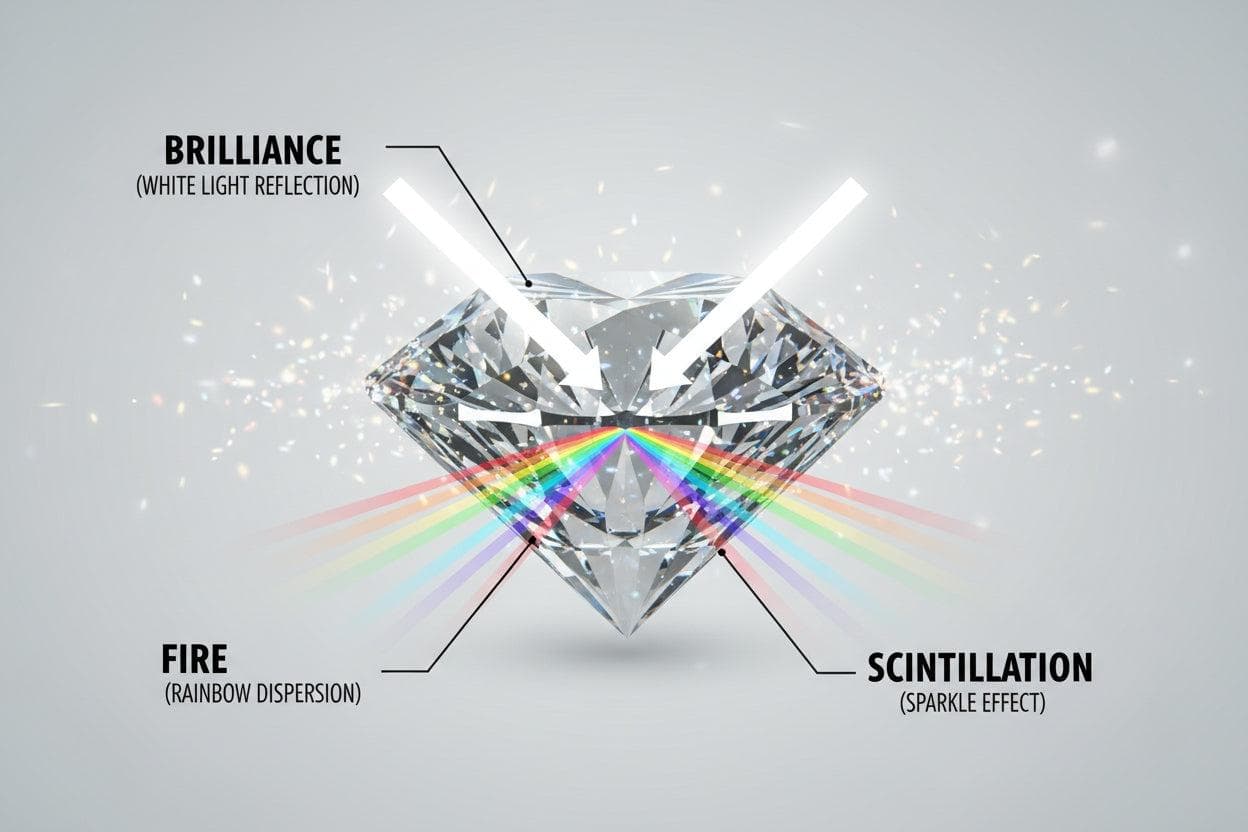
How Light Creates Brilliance in Diamonds

How Light Creates Brilliance in Diamonds

The brilliance of a diamond is driven by three key optical principles:

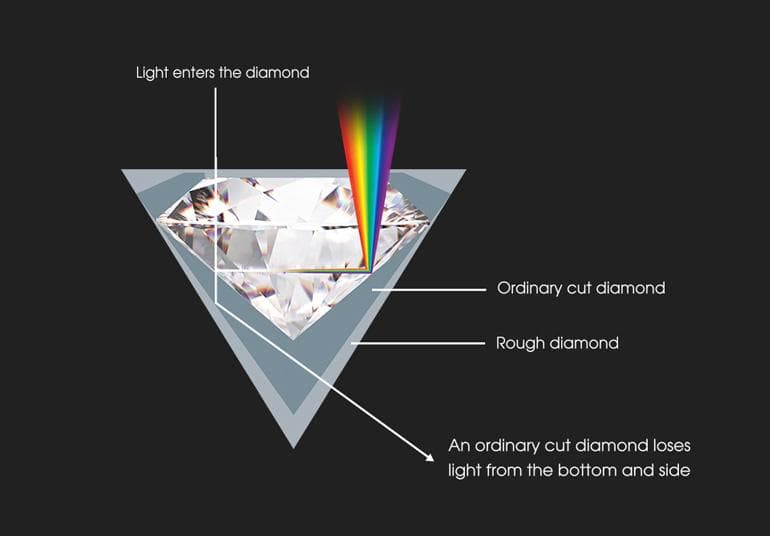
1. Refraction (Bending of Light): When light enters a diamond, it slows down and bends. Diamonds have a high refractive index (~2.42), meaning they bend light more than most gemstones—this is why they appear so bright.

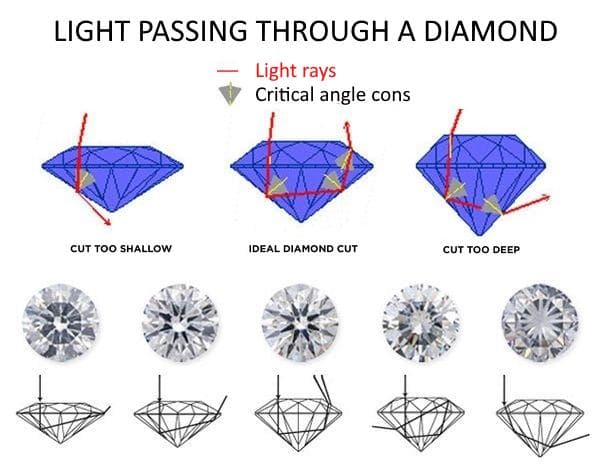
2. Total Internal Reflection: Once inside, light reflects off the diamond’s internal surfaces (facets). If the angles are correct, light is trapped and reflected back through the top instead of escaping.

3. Dispersion (Splitting of Light): Diamonds break white light into its spectral colors, creating flashes of red, blue, and green—this is known as fire.

Why Diamond Cut Is the Most Important Factor

Why Diamond Cut Is the Most Important Factor

Among the famous “4 Cs” (Cut, Color, Clarity, Carat), cut has the biggest impact on brilliance.

Ideal Cut → Maximizes light return, giving exceptional sparkle

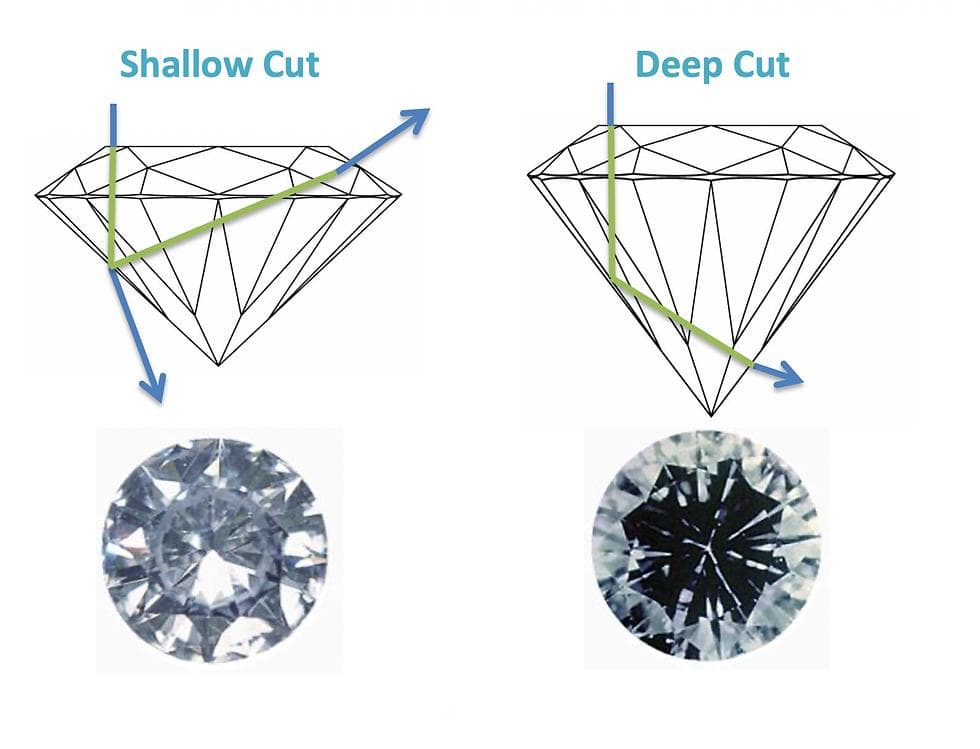
Shallow Cut → Light escapes from the bottom → dull appearance

Deep Cut → Light leaks from the sides → reduced brilliance

Even a large or flawless diamond can look lifeless if it is poorly cut.

The Role of Facets in Sparkle

The Role of Facets in Sparkle

A standard round brilliant diamond has 58 precisely arranged facets. Each facet acts like a mirror:

Reflecting light internally

Directing light back to your eyes

Enhancing sparkle and contrast

Perfect symmetry and alignment are critical—small imperfections can reduce brilliance significantly.

Do Color and Clarity Affect Brilliance?

Yes, but they play a supporting role:

Clarity: Inclusions can block or scatter light

Color: Colorless diamonds allow more light to pass through

However, these factors matter far less than cut when it comes to sparkle.

Why Diamonds Outshine Other Gemstones

Why Diamonds Outshine Other Gemstones

Diamonds are considered the most brilliant gemstone because of:

Exceptional refractive index → More light return

Strong dispersion → More colorful fire

Extreme hardness (10 on Mohs scale) → Long-lasting sharp facets

This combination makes diamonds uniquely capable of producing unmatched brilliance.

Final Thoughts: Choosing a Brilliant Diamond

Understanding the science behind diamond brilliance helps you make better buying decisions.

👉 If you want maximum sparkle, prioritize:

Excellent or Ideal Cut

Good symmetry and proportions

Balanced clarity and color

A well-cut diamond doesn’t just shine—it comes alive with light.